
Joel Cape
Providing legal advice is just the start; true value lies in understanding how the law executes within your business operations. My understanding and experience of how law, business strategy, and the agricultural sector integrate is how I deliver value and results to my clients.
My Story
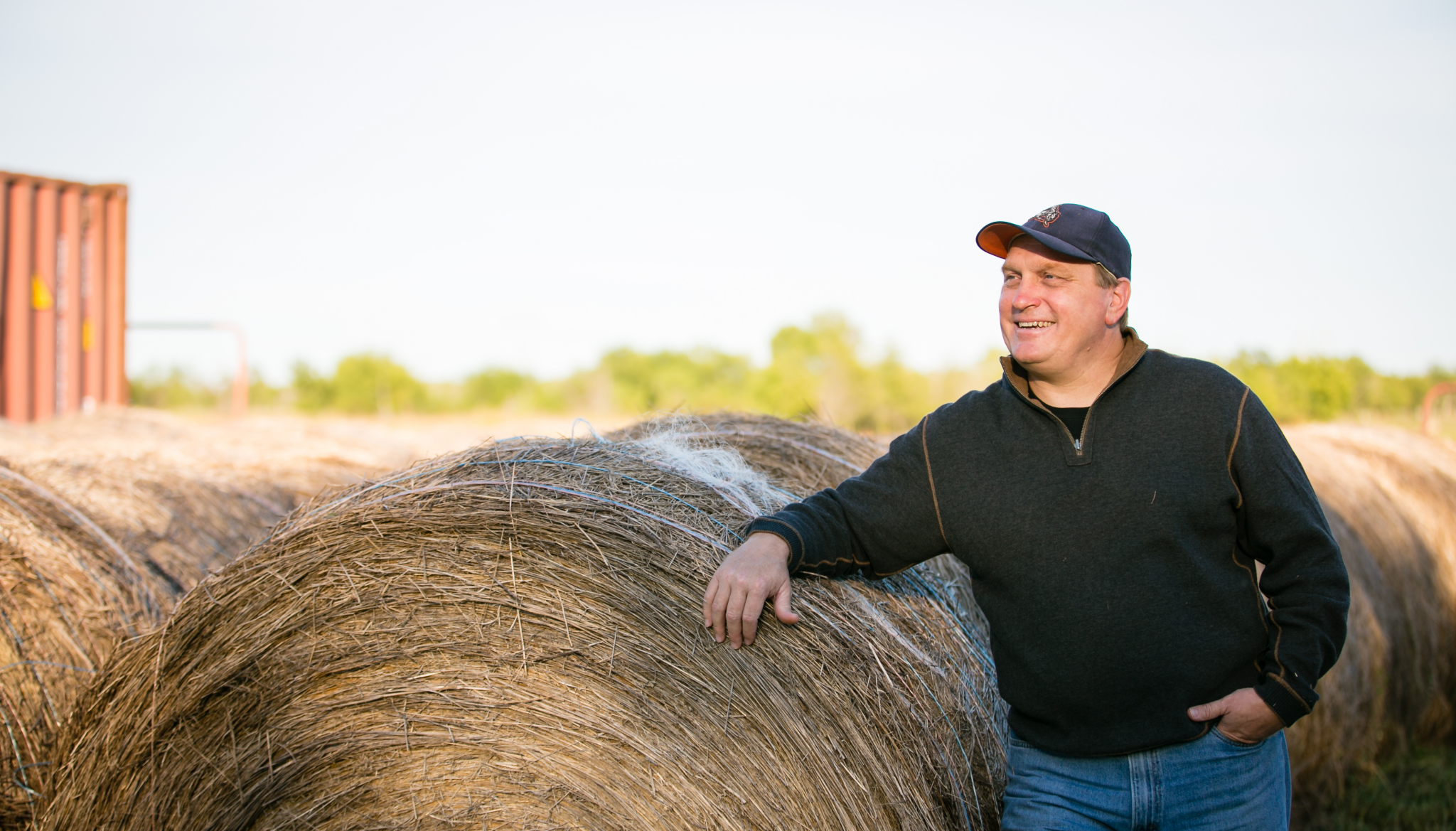
In 1971, the population of my hometown of Collinsville, Oklahoma, hovered right around 3,000 stalwart (and a few reckless) citizens. By the time I strode across the gymnasium stage to collect my high school diploma in the spring of 1989, our incorporated municipality had swelled to around 3,500 – a respectable growth rate, but not enough to lure a McDonald’s. Collinsville was also somewhat of a geopolitical enigma, lying roughly at the intersection of three sovereigns, the Cherokee Nation, the Muscogee Creek Nation, and the Osage Nation, despite being just over 20 miles north of Tulsa, one of the original oil boomtowns. While Tulsa provided access to city amenities such as an international airport, various minor league sports teams, and a collection of Lebanese steakhouses, the surrounding territory was predominantly hay meadows, pastures, and wheat fields, more or less populated with cattle.
Diamond Cross Ranch, the official name my Dad gave to our parcel located in the middle of a mile section a few miles north of town, was the stage for my formative years. As the name suggests, we did in fact have a herd of bovines roaming about the place, a circumstance that tended to generate a profuse amount of daily labor in the out-of-doors. At any given time, at least a few of our range beasts held an unwavering faith that the grass was, in fact, greener on the other side of the fence, as the miles I’ve trod returning escapees to their barbed-wire confines would circumnavigate the globe. Nevertheless, we aimed to manage it as a savvy purebred operation.
Like many youngsters of rural upbringing, I became a member of the local 4-H Chapter and later joined FFA in high school. These premier youth organizations schooled us in such polite society skills as public speaking, parliamentary procedure, and properly tying a Half Windsor knot. They also provided eligibility to compete in the junior leagues of competitive agriculture, which in my case, was showing purebred heifers and market steers. Months of feeding, training, washing, and grooming ultimately culminated in a high-stakes battle of beef on the hoof and a shot at a lacquered-wood trophy (or, on rare occasion, a silver buckle). Indeed, a well-performing animal at these exhibitions often provided a pulpit to promote your bloodlines. And there was something about the combined aromas of wheat straw (or wood shavings), manure, various coat dressings, and the multitude of adhesives applied to pasterns, legs, hocks, and topknots that was oddly pleasant in a way that defied logic. The shows always felt like prime-time entertainment.
My parents’ non-optional plan for my post-secondary education was reinforced by a couple of near-simultaneous economic calamities. A bust in crude oil prices put quite a bruise on Oklahoma’s oil-centric economy, while a greatly overleveraged U.S. farm economy tumbled into a Farm Crisis. The question was not whether I would go to college; rather, it was what to study when I got there. Despite a lingering hangover from the dismal farm economy of the mid-1980s, I was still drawn to agriculture as I started college. There is just something about it that is hard to shake once it settles in.
While pursuing an Associate’s degree at Northeastern Oklahoma A&M College, I had the tremendous good fortune to meet Roger Fent, a passionate agriculturalist and teacher with a remarkable gift for inspiring his students. Thus, during Roger’s freshman-level agriculture economics course, the clouds parted, and the sun shone on Ag Econ as my future degree.
Precisely how the notion of law school entered my mind remains a bit of a mystery (especially since there wasn’t a single lawyer in my family tree). But as I recall, after a couple of compelling internships while pursuing my Bachelor’s degree at Oklahoma State University (and meeting my future wife), the law emerged as a path worth exploring. While applying to law schools during my final semesters at OSU, I discovered the unique opportunity to combine legal studies with agriculture at the University of Arkansas School of Law. Besides a Juris Doctor degree, the UofA offered a Master of Laws in Agricultural Law. It was if divine intervention had opened the door for me to remain rooted in agriculture with a legal career.
Since 1998, I’ve been monumentally blessed to be a lawyer in the agricultural sector at a time of great technological advancement. Practicing at both large and small firms, and now at my own firm, I’ve represented international seed and genetics developers, crop protection registrants and distributors, plant breeders, brand owners, seed companies, and enterprises of all sizes in intellectual property, litigation, regulatory, and business matters. From the protection of biotech traits, to I.P. enforcement, to constructing national distributorships, to licensing genetics, to crop damage claims, my practice has been, and remains, centered on agricultural technology and the professionals that bring it to market.
It has been rewarding and a distinct honor to provide lawyerly solutions and results to the hard-working, deep-thinking, troubleshooting, dedicated, free-spirited, and amazingly smart folks in the agricultural sector.
I have a passion for finding solutions to tough problems in the business of agriculture and food. A common sense solution for my clients’ thorniest problems – that is the aim of this practice.